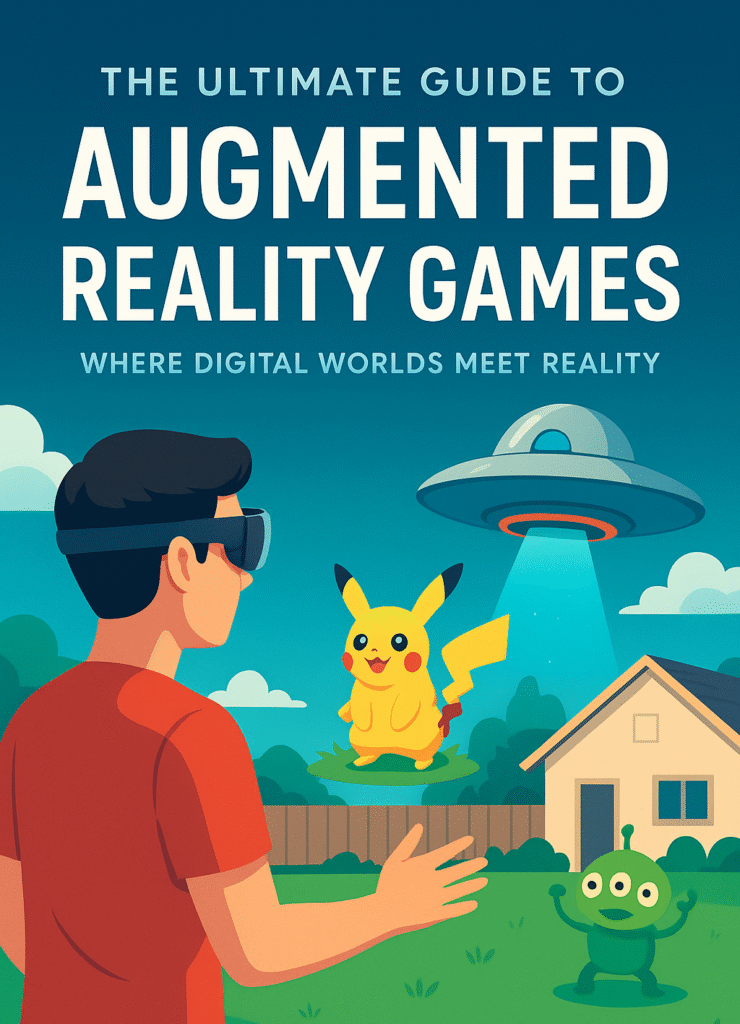
Introduction
Remember when smartphones felt like magic? Now, imagine a world where digital information floats right in front of your eyes, blending seamlessly with reality. That’s not science fiction anymore—it’s augmented reality in daily life, and it’s already here.
You’ve probably used augmented reality in daily life without even realizing it. From trying on glasses online to playing games, AR technology is quietly becoming part of our everyday routines. But this is just the beginning.
In this article, we’ll explore how augmented reality in daily life works today and why experts believe it will become as essential as the internet itself.
What is Augmented Reality?
Before diving deep, let’s make this simple. Augmented reality (AR) is technology that adds digital elements to your real-world view. Unlike virtual reality that creates a completely fake world, AR enhances the world you’re already looking at.
Think of it like wearing special glasses that can show you extra information about everything around you—prices, directions, or even how furniture would look in your room.
Real Uses of Augmented Reality in Daily Life Today
1. Shopping Gets Smarter
Shopping has completely changed thanks to augmented reality in daily life. Major brands like IKEA, Amazon, and Sephora now let you:
- Try before you buy: See how that couch looks in your living room without leaving home
- Virtual makeup testing: Apply lipstick shades on your face through your phone camera
- Clothing trials: Check if that dress fits your style without visiting the store
- Size checking: Make sure products fit in your space before purchasing
This isn’t just convenient—it saves time, reduces returns, and helps you make better buying decisions.
2. Education Becomes Interactive 

Students today learn differently than we did. Augmented reality in daily life has transformed boring textbooks into exciting experiences:
- Medical students can examine 3D organs floating in front of them
- History comes alive when ancient civilizations appear on your desk
- Chemistry experiments become safe and repeatable
- Geography lessons let you explore mountains and oceans without traveling
Teachers report that students stay more focused and remember information better when AR is involved.
3. Navigation That Actually Helps
Getting lost is becoming a thing of the past. AR navigation shows you:
- Arrows floating on the actual street showing where to turn
- Information about buildings as you walk past them
- Real-time public transport schedules at bus stops
- Walking directions overlaid on the real world
Google Maps already uses augmented reality in daily life to help millions find their way every single day.
4. Healthcare Gets Personal
Doctors and patients both benefit from augmented reality in daily life:
- Surgeons see patient data and 3D scans during operations
- Nurses find veins easier for injections
- Physical therapy exercises become interactive games
- Patients understand their conditions through 3D visualizations
This technology makes medical procedures safer and more accurate.
5. Work and Training Made Easy
Companies are saving millions by using AR for training:
- Factory workers see instructions floating over machinery
- Technicians get remote expert guidance through AR glasses
- Architects walk through buildings before they’re built
- Remote teams collaborate on 3D models together
The practical applications of augmented reality in daily life are endless in professional settings.
6. Social Media and Entertainment
You use AR more than you think on social media:
- Snapchat and Instagram filters that change your face
- Pokemon Go and similar AR games
- Virtual backgrounds in video calls
- Interactive museum exhibits and art galleries
These fun uses help people become comfortable with AR technology.
7. Home Improvement Projects
DIY enthusiasts love augmented reality in daily life because it helps them:
- Visualize paint colors on walls before buying
- Place virtual furniture to plan room layouts
- Get step-by-step repair instructions overlaid on appliances
- Measure spaces accurately without a tape measure
Home Depot and Lowe’s apps make renovations less stressful.
Why Augmented Reality Will Dominate Our Future
Now here’s where it gets really interesting. Augmented reality in daily life isn’t just a cool trend—it’s becoming essential. Here’s why:
1. Technology is Getting Better and Cheaper
Five years ago, AR required expensive equipment. Today, your smartphone is powerful enough. Tomorrow, AR glasses will be as normal as regular eyeglasses and cost about the same.
Apple, Meta, Google, and Microsoft are investing billions in AR. When tech giants bet this big, they usually win.
2. The Internet is Evolving
The internet is moving from screens to the world around us. Just like we went from desktop computers to smartphones, we’re now moving from phones to augmented reality in daily life.
Imagine walking down the street and instantly seeing:
- Restaurant reviews floating above each door
- Friends’ recommendations for nearby places
- Real-time language translation of foreign signs
- Your calendar reminders at the right location
This “spatial internet” is coming fast.
3. Young People Expect It
Kids growing up today think AR filters and effects are normal. They expect digital and physical worlds to blend. As they become adults, augmented reality in daily life will seem as basic as having Wi-Fi.
4. Remote Work Needs It
Since COVID-19, remote work exploded. But video calls feel flat and disconnected. Augmented reality in daily life will make remote collaboration feel real:
- Virtual meeting rooms where colleagues appear as holograms
- Shared 3D workspaces everyone can interact with
- Training that feels hands-on even from home
Companies need this technology to stay competitive.
5. Problems That Only AR Can Solve
Some everyday problems have no good solution yet—except AR:
- Language barriers when traveling
- Complex device repairs
- Understanding medical diagnoses
- Learning practical skills remotely
- Accessibility for people with disabilities
Augmented reality in daily life provides answers where nothing else works well.
6. The 5G Revolution
Fast 5G internet makes AR smooth and instant. Without lag or delays, augmented reality in daily life becomes seamless. The infrastructure is finally ready for mass adoption.
7. Economic Impact
The AR market is exploding. Experts predict it will be worth over $300 billion by 2028. This massive investment guarantees that augmented reality in daily life will keep improving and becoming more accessible.
Common Concerns About AR
“Won’t This Be Distracting?”
Yes, if misused. But remember when people said phones would distract us from real life? We learned to use them responsibly. The same will happen with augmented reality in daily life. Smart design will make AR helpful, not overwhelming.
“What About Privacy?”
Valid concern. AR devices will see everything you see. Companies and governments must create strong privacy laws. We’re already having these important conversations.
“Will It Replace Real Experiences?”
No. AR enhances reality, not replaces it. You’ll still visit museums, meet friends in person, and enjoy nature. But augmented reality in daily life will make those experiences richer when you want it to.
“Is It Just for Rich People?”
Initially, yes, like all technology. But smartphones were once luxury items. Within five years, affordable AR devices will be everywhere, making augmented reality in daily life accessible to billions.
How to Get Started with AR Today
You don’t need to wait for the future. You can experience augmented reality in daily life right now:
- Download AR apps: Try IKEA Place, Google Lens, or Snapchat
- Use AR features: Most new smartphones have built-in AR capabilities
- Play AR games: Pokemon Go is still popular and fun
- Shop with AR: Many retail apps now include virtual try-on
- Explore AR art: Museums and cities have AR experiences
Getting comfortable with AR now means you’ll be ready when it becomes essential.
The Bottom Line
Augmented reality in daily life isn’t coming—it’s already here. We’re just in the early stages, like having the internet in 1995. It seems optional now, but soon it will be impossible to imagine life without it.
Why? Because AR solves real problems. It makes shopping easier, learning better, work more efficient, and daily tasks simpler. That’s not hype—that’s genuine value.
The question isn’t whether augmented reality in daily life will become normal. The question is how quickly you’ll adopt it.
Technology that makes life genuinely better always wins. And that’s exactly what AR does.
More Amazing Ways AR is Changing Daily Life
8. Cooking and Recipe Assistance
Your kitchen is becoming smarter with augmented reality in daily life. Modern AR cooking apps can:
- Display recipe steps floating above your counter
- Show you exactly how to cut vegetables with visual guides
- Set timers that appear right where you’re cooking
- Suggest wine pairings when you point your phone at a dish
- Teach cooking techniques through animated demonstrations
- Help you portion ingredients accurately without measuring tools
Imagine never burning dinner again because AR reminds you exactly when to flip that steak!
9. Real Estate and Property Viewing
House hunting has been revolutionized. Potential buyers now use augmented reality in daily life to:
- Take virtual tours from their couch
- See empty rooms furnished with different styles
- Visualize renovation possibilities
- Check if their current furniture fits in new spaces
- Get instant information about neighborhood amenities
- View property history and pricing trends on-screen
Real estate agents report that AR-equipped listings sell 30% faster than traditional ones.
10. Fitness and Exercise
Gyms are no longer the only place to get proper training. Augmented reality in daily life brings personal trainers to your home:
- AR mirrors show your form and correct your posture in real-time
- Virtual trainers demonstrate exercises right in your living room
- Gamified workouts make exercise fun and addictive
- Track your movements and count reps automatically
- Running apps show your pace and route information overlaid on the street
- Yoga apps display proper alignment over your body
People stick to fitness routines longer when AR makes them interactive and engaging.
11. Tourism and Travel Enhancement
Traveling to new places becomes richer with augmented reality in daily life:
- Point your phone at any monument to see its history
- Get instant translation of menus, signs, and conversations
- See reviews and ratings floating above restaurants and hotels
- Follow AR tour guides through cities without getting lost
- Time-travel features show how places looked centuries ago
- Interactive maps highlight hidden gems tourists usually miss
Tourism boards worldwide are investing heavily in AR experiences to attract visitors.
The Technology Behind AR: Understanding the Magic
You don’t need to be a tech expert, but understanding how augmented reality in daily life works makes it less mysterious:
Sensors and Cameras
Your smartphone or AR glasses use cameras to see the world. Advanced sensors detect depth, distance, and surfaces. This lets AR know where to place digital objects so they look real.
Processing Power
Modern chips process millions of calculations per second. They track your movement, understand your surroundings, and render graphics instantly. This is why augmented reality in daily life feels smooth and responsive now.
Software and AI
Artificial intelligence recognizes objects, faces, and spaces. Machine learning helps AR understand context—knowing the difference between a table and a floor, for example.
Display Technology
Screens or glasses project digital content. The best AR experiences use transparent displays that let you see reality and digital elements simultaneously without blocking your view.
Industries Being Transformed by AR
Manufacturing and Industry
Factories are becoming smarter with augmented reality in daily life on the production floor:
- Workers see assembly instructions without reading manuals
- Quality control inspectors spot defects faster with AR highlighting
- Maintenance schedules appear on machinery automatically
- Remote experts guide on-site workers through complex repairs
- Training new employees takes half the time with interactive AR lessons
Companies like Boeing save millions of dollars annually using AR in production.
Retail and Customer Experience
Shopping malls and stores are reinventing themselves:
- Virtual fitting rooms eliminate the need for physical changing
- Product information appears when you pick up items
- Loyalty rewards and discounts pop up as you shop
- Interactive displays let you customize products in real-time
- Store navigation helps you find exactly what you need
Retailers using augmented reality in daily life see 40% higher customer engagement.
Automotive and Transportation
Cars are becoming AR platforms:
- Windshields display navigation without looking away from the road
- Parking assistance shows exactly where your car fits
- Maintenance alerts appear on the actual car parts
- Driving lessons with AR guidance make learning easier
- Enhanced night vision highlights pedestrians and obstacles
Future cars will have augmented reality in daily life built into every windshield as standard.
Entertainment and Gaming
Beyond Pokemon Go, the entertainment world is exploding with AR:
- Live concerts with virtual performers appearing on stage
- Sports broadcasts with real-time stats floating above players
- Board games that come alive on your table
- Escape rooms that transform your home
- Movie experiences that extend beyond the screen
The gaming industry alone will invest over $50 billion in AR by 2026.
Challenges AR Must Overcome
Battery Life
Current AR devices drain batteries quickly. Engineers are working on more efficient processors and better battery technology. Soon, augmented reality in daily life won’t mean constantly hunting for chargers.
Design and Comfort
Nobody wants to wear bulky, ugly glasses all day. Companies are racing to create AR glasses that look like regular eyewear. Fashion and function must merge for mass adoption.
Content Creation
We need more AR experiences. Developers are learning to create compelling AR content, but we’re still in early days. As tools improve, augmented reality in daily life will become richer and more varied.
Social Acceptance
Remember when people thought Bluetooth headsets looked weird? Same thing is happening with AR glasses. But social norms change quickly when technology proves useful.
How Businesses Can Prepare for the AR Future
If you run a business, now is the time to think about augmented reality in daily life:
Start Small: Add simple AR features to your app or website. Let customers visualize products or access interactive manuals.
Train Your Team: Make sure employees understand AR technology. The workforce that adapts early will have huge advantages.
Watch Competitors: See what others in your industry are doing with AR. Don’t get left behind.
Invest Gradually: You don’t need millions to start. Small AR experiments can test what works for your customers.
Focus on Value: Don’t add AR just because it’s cool. Use augmented reality in daily life to solve actual customer problems.
The Role of AR in Education’s Future
Schools and universities are preparing for an AR-first world:
- Virtual field trips to anywhere in the world or history
- Science experiments without expensive lab equipment
- Language learning with real-world context overlays
- Special education tools for students with learning differences
- Collaboration across classrooms in different countries
Teachers who embrace augmented reality in daily life report students are more engaged and perform better on tests.
AR and Social Connection
Paradoxically, augmented reality in daily life might make us more connected, not less:
- Share AR experiences with friends in real-time
- Leave virtual notes and messages in physical locations
- Play multiplayer AR games in the same physical space
- Attend virtual events while being physically present elsewhere
- Create shared memories through AR photo filters and effects
The key is using AR to enhance human connection, not replace it.
Environmental Benefits of AR
Here’s something surprising—augmented reality in daily life could help save the planet:
- Reduce returns by trying before buying (less shipping waste)
- Virtual meetings cut down on travel and emissions
- Digital manuals save paper and printing
- Better training reduces workplace accidents and waste
- Smart AR tools help with energy-efficient home improvements
As climate change concerns grow, AR offers practical solutions.
What Experts Predict for 2030
Industry leaders forecast that by 2030:
- 1 billion people will use AR glasses daily
- Most shopping will include AR try-before-buy features
- Elementary schools will require AR devices like they require calculators today
- Remote work through AR will feel as natural as being in an office
- Cities will have AR layers with information, art, and navigation
- Healthcare will be transformed by surgical AR and diagnostic tools
These aren’t wild guesses—these predictions are based on current growth rates and investment trends in augmented reality in daily life.
Taking Action: Your AR Journey Starts Now
Here’s your practical roadmap to embracing AR:
Week 1: Download three AR apps and use them daily. Get comfortable with the basics.
Month 1: Try AR shopping. Buy something using virtual try-on. Experience how augmented reality in daily life makes decisions easier.
Month 3: Explore AR in your profession. Find industry-specific AR tools that could help your work.
Month 6: Recommend AR solutions to your workplace or community. Be an early adopter who leads others.
Year 1: Consider investing in AR stocks or companies. The financial opportunity is massive for early believers.
Final Thoughts
We’re standing at the edge of a major shift in how humans interact with information and each other. Augmented reality in daily life represents the natural next step in our relationship with technology.
The smartphone revolution took about 10 years to reach worldwide adoption. AR will likely happen faster because the infrastructure already exists. We have the internet, we have powerful devices, and we have people ready for the next innovation.
Start exploring AR today. Try the apps. Experiment with the features. Get used to seeing digital elements in your physical world. Because very soon, everyone will.
The future isn’t about escaping reality—it’s about enhancing it. And that future is already beginning. Those who embrace augmented reality in daily life now will lead tomorrow’s world. The question is: will you be watching from the sidelines, or will you be part of the revolution?
The choice is yours. But remember—every revolution in technology seemed optional until suddenly it wasn’t. Don’t wait until AR becomes mandatory to understand it. Jump in now, while you still have the advantage of being early.
Welcome to the augmented future. It’s going to be incredible.